Structurally insulated panels
Structural insulated panels, or SIP panels, are one of the most advanced construction solutions for combining fast building speed, high energy efficiency, and structural stability.
This technology uses factory-made panels in which insulation material, typically EPS or polyurethane, is placed between two OSB boards, creating a structure that is both load-bearing and insulating at the same time.
SIP panels are becoming increasingly popular in both private housing and more complex residential projects due to their efficiency and ease of installation. They are manufactured according to a precise design and prepared in the factory, which significantly reduces on-site work and shortens the construction process. Assembly is fast, clean, and accurate, making it possible to reach a high level of structural completion in a much shorter time than with conventional building methods.
One of the main advantages of SIP systems is their strong thermal performance. Their insulation value is considerably higher than that of many traditional wall systems of the same thickness, as thermal bridges and connection losses are minimized. This results in lower heating costs, a more stable indoor climate, and a more efficient route toward low-energy or passive building standards.
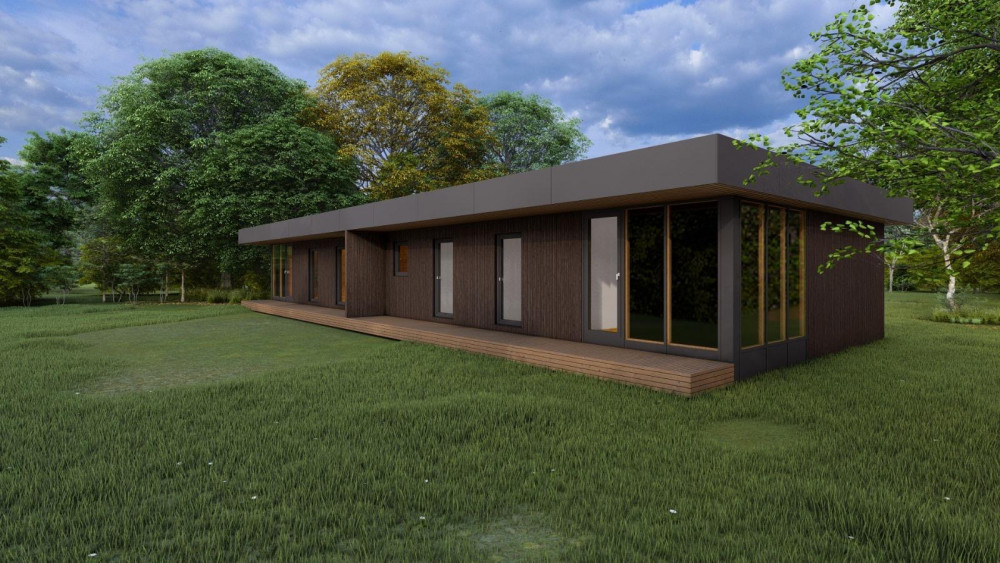
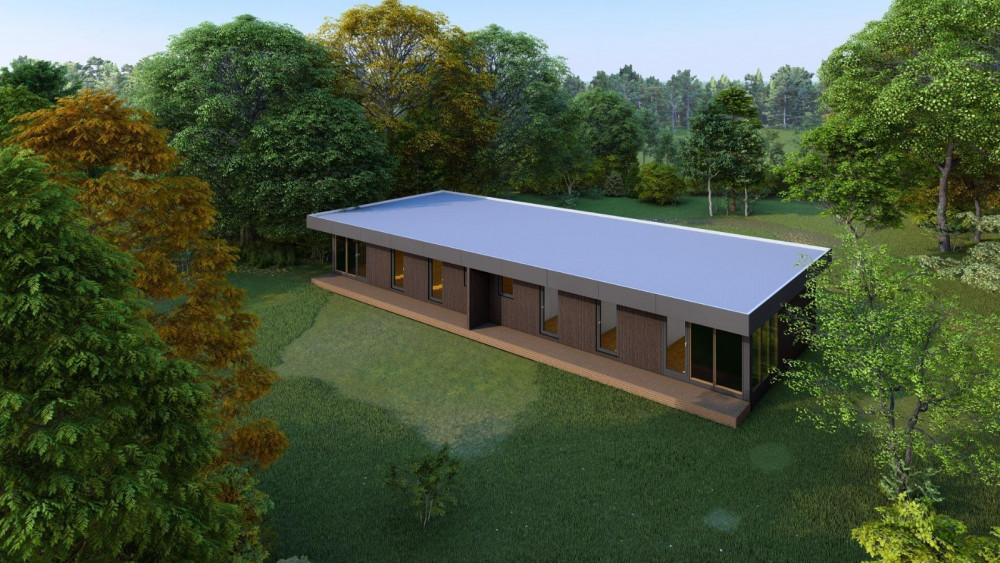
In our projects, SIP panels have already been successfully used in the twin-house development on Aidas Street in Saulkalne, where this technology forms part of a hybrid solution. The outer walls are built from SIP panels, while glued laminated timber elements are used in corners and exposed structural areas. This approach combines the advantages of both systems — SIP provides excellent thermal performance and installation speed, while glulam adds architectural quality and structural strength where it matters most.
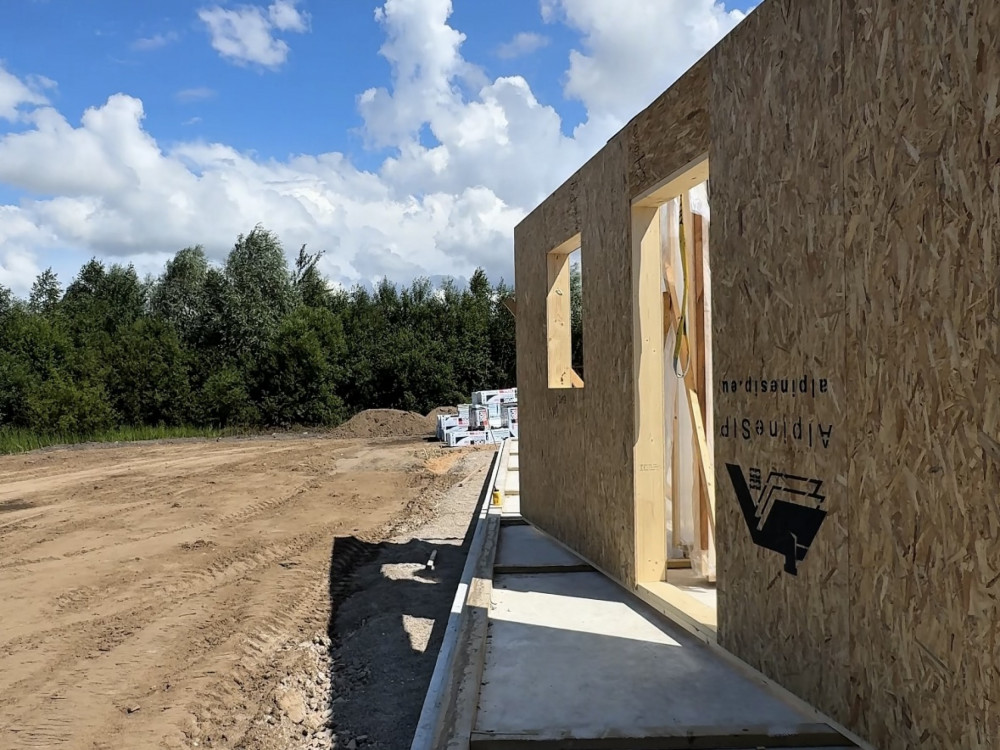
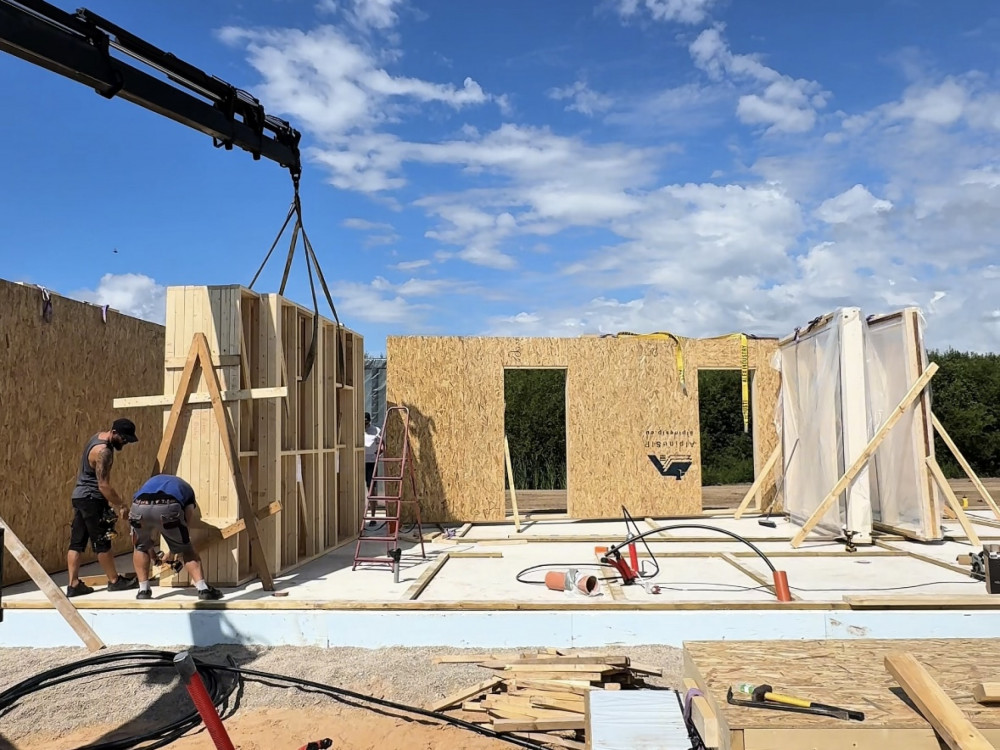
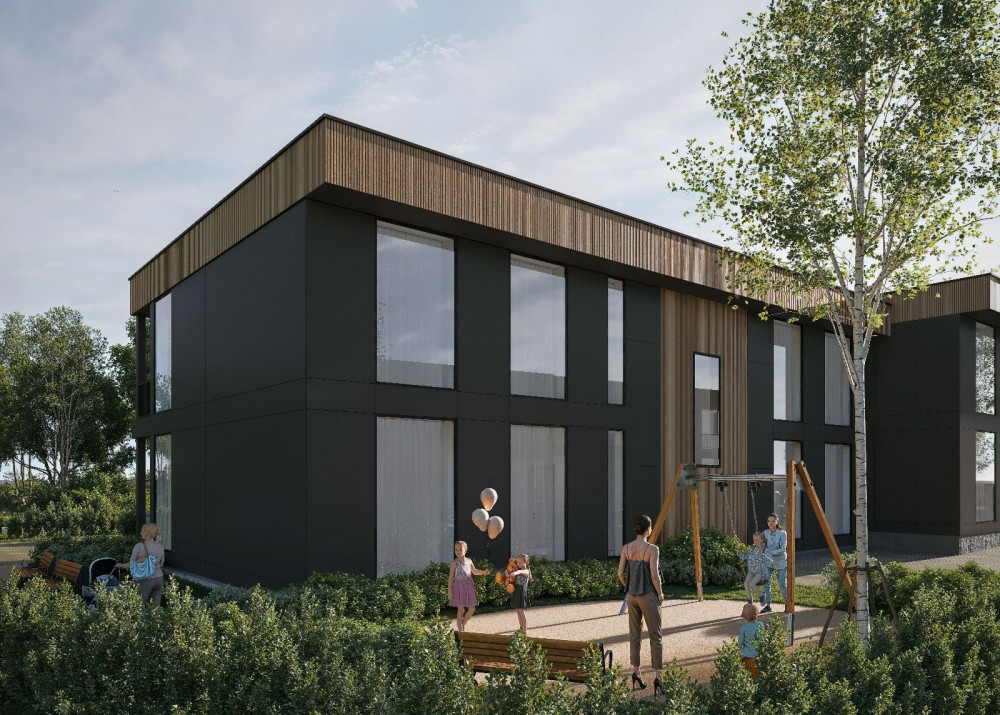
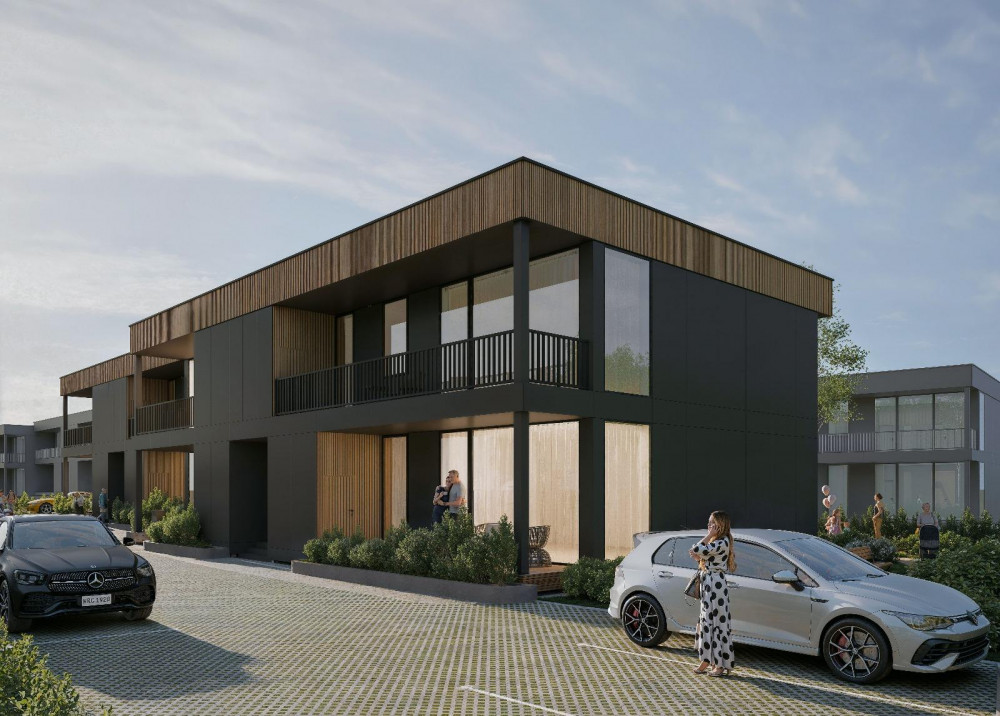
SIP technology will also be used in our next apartment building project in Tilderu kvartāls at Alūksnes Street 2, where the external walls will be formed from SIP panels, visually combined with large glazed façades and glulam corner elements. This combination allows us to meet architectural, structural, and energy-efficiency goals within a single solution.
The limitations of SIP panels are mainly related to their industrial precision. Accuracy is essential already at the design stage, because changes on site are difficult and often impossible. High manufacturing quality is also critical — bonding, CNC cutting, and finishing must meet a very high standard. We work with a partner who ensures accurate, reliable, and high-quality SIP panel production using modern equipment and proven materials.
Their rigidity, low weight, and excellent insulation make SIP panels suitable for row houses, low-rise apartment buildings, and private homes. They are particularly effective when speed, energy efficiency, and long-term cost optimization are priorities. In addition, because the panel thickness can remain relatively compact, it is possible to achieve more usable floor area within the same building dimensions, which becomes especially important in denser development areas.
SIP panels are not suitable for every project, but where construction speed, long-term efficiency, and thermal performance are critical, this technology proves itself in practice as one of the most effective construction approaches.
It is a solution for those who want precise, fast, and energy-efficient construction with a clear long-term perspective.