Cross-laminated timber panel system
CLT, or cross-laminated timber panels, is a relatively new but rapidly growing construction technology that combines the structural reliability of solid timber with modern sustainability principles.
It is a strong example of how engineering and natural materials can work together to create architectural solutions that are both technically advanced and visually refined.
CLT panels are made by bonding multiple layers of timber together in alternating directions, usually in 3 to 7 layers. This change in grain direction gives the structure high mechanical strength, dimensional stability, and load-bearing capacity in multiple directions. This is what sets CLT apart from other timber panel solutions — the panels remain resistant to deformation, bending, and twisting even at larger sizes.
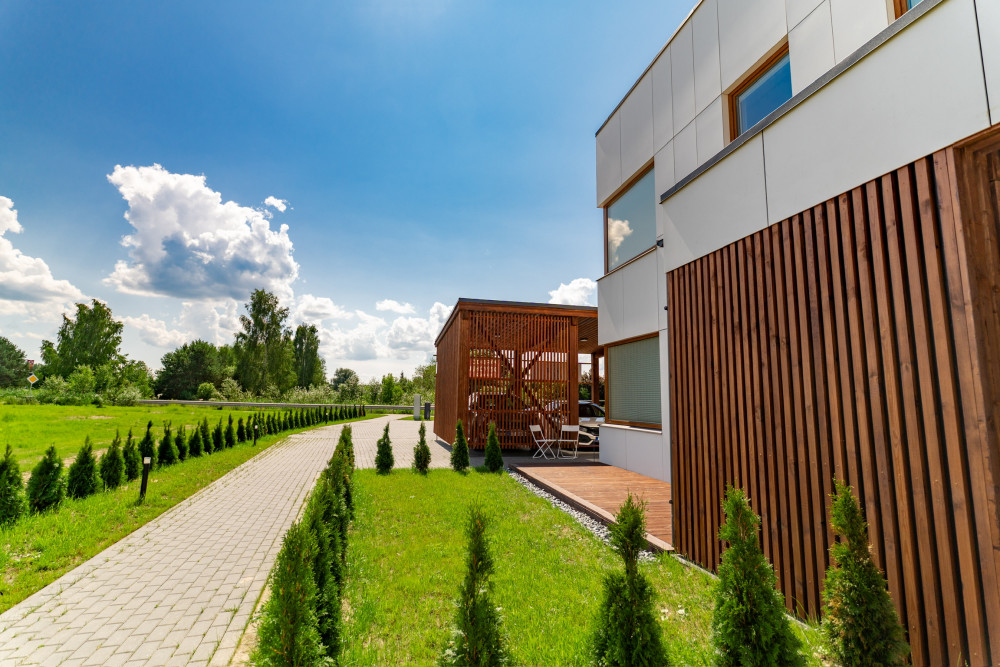
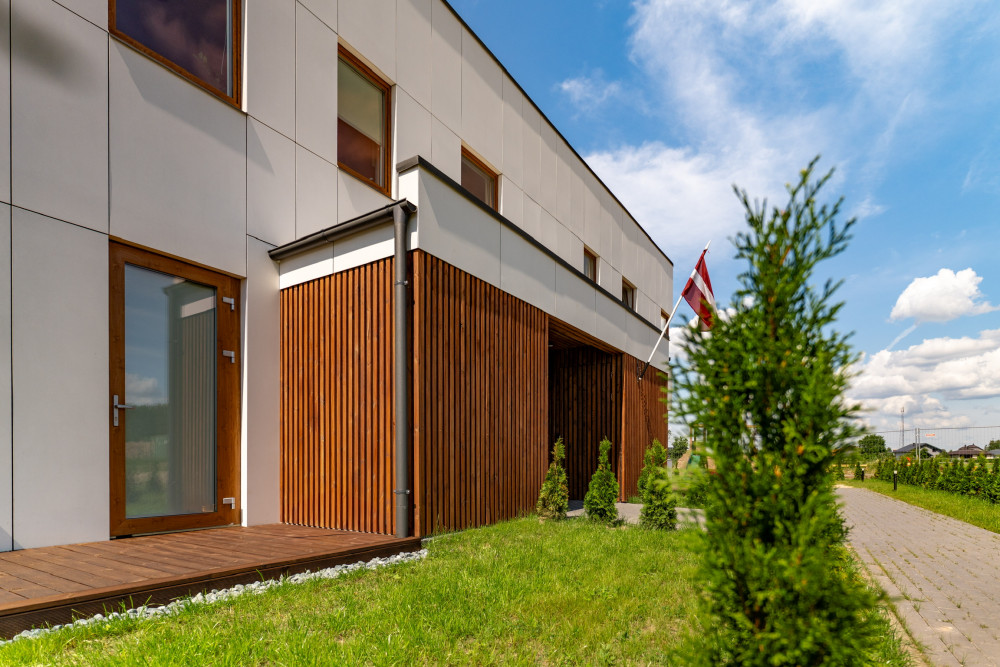
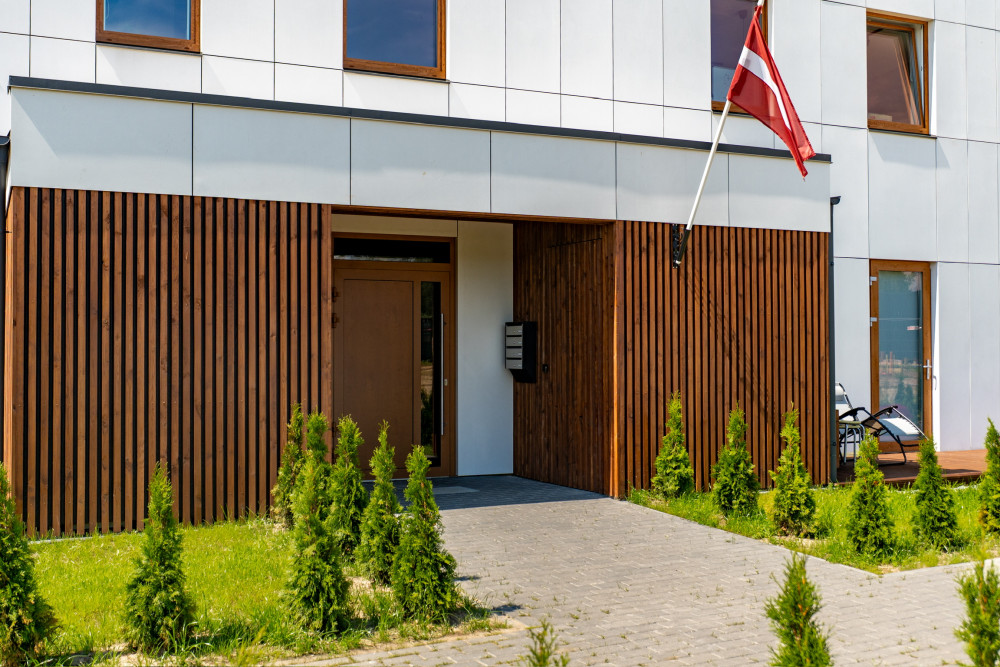
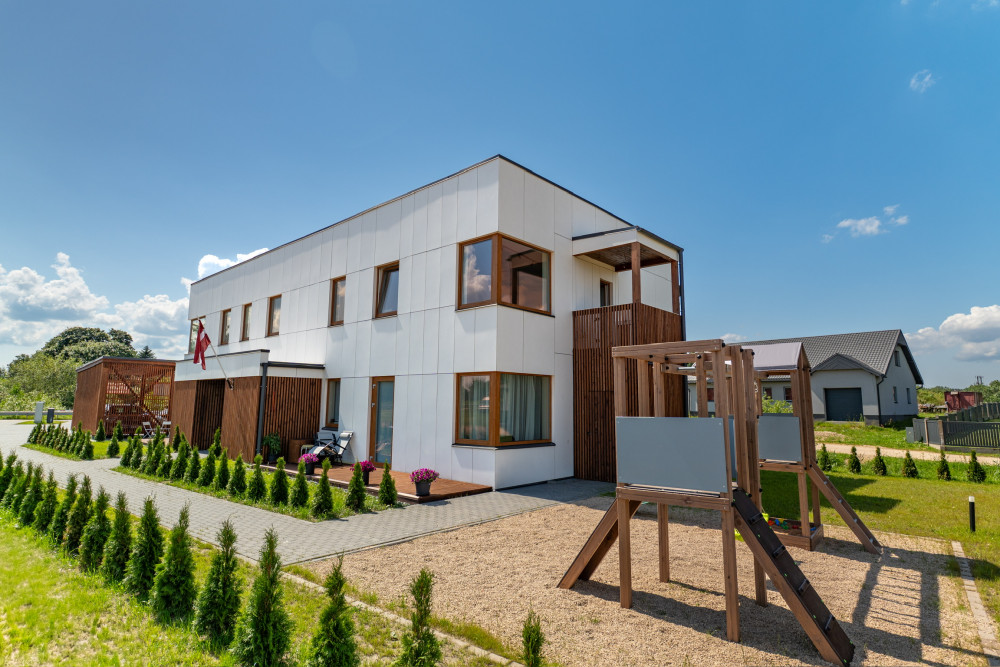
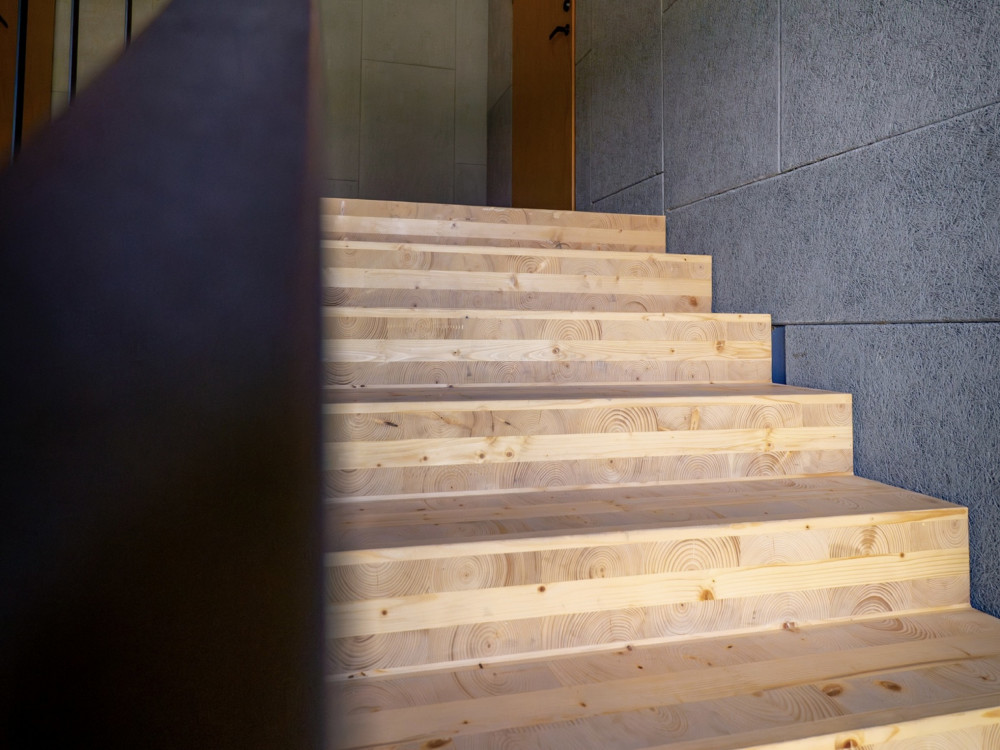
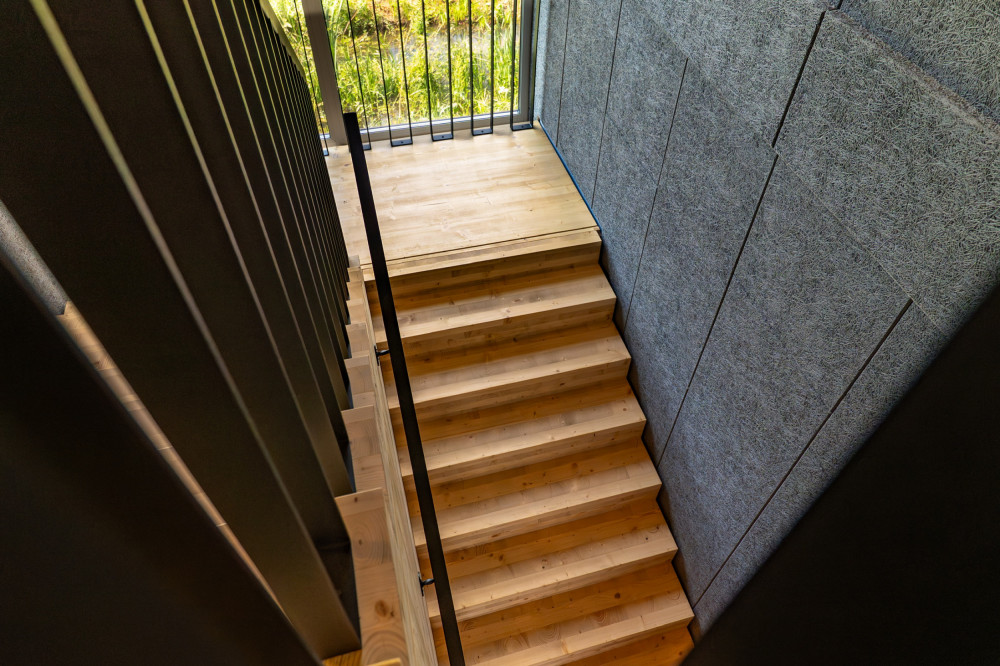
One of the major advantages of CLT is its architectural potential. It can be used not only for walls and floor structures, but also for stairs, floors, and even lift shafts. At the same time, it preserves the natural visual warmth of timber, which is why it is often left exposed as part of the interior. We used this approach in the first building of Tilderu kvartāls at Tilderu Street 2C, where cross-laminated timber panels form the internal staircase — an elegant and structurally reliable element that combines design and functionality.
This technology is especially suitable for projects that need to be completed within a shorter timeframe while maintaining a high level of quality and precision. CLT panels are manufactured industrially with millimetre-level accuracy, which allows for fast on-site assembly without additional processing. This dry construction method makes the overall building process cleaner, quieter, and more efficient — particularly valuable in urban projects or locations with restricted access.
Another important advantage of CLT is its strong fire performance. Although timber burns, CLT does so in a slow and predictable way, forming a protective char layer that helps preserve the internal structure. It also offers thermal mass that helps maintain a stable indoor temperature and improves long-term energy efficiency. In addition, CLT performs well acoustically, which is a major benefit in both apartment buildings and private homes.
At the same time, CLT is not a universal solution for every project. Its cost remains higher than that of more traditional timber systems, and transportation requires careful planning, as the panels are large, heavy, and need to be positioned accurately from the start. To preserve their visual quality, installation must be carried out with a high level of precision by experienced specialists, since any errors become immediately visible and are often difficult to correct without costly changes.
CLT technology also requires high-quality design work from the very beginning, because the panels are ordered with pre-cut openings for windows, doors, and connections. That means any design changes after production begins become highly complicated. On the other hand, this same level of preparation and precision can significantly reduce the total construction time, which in many cases offsets the higher initial cost.
Cross-laminated timber panels are a technology that is changing expectations of what is possible in timber construction. They make it possible to create ambitious, sustainable, and high-quality architectural solutions for both low-rise apartment buildings and exclusive private homes.
This is a choice for those who want to combine structural progress with visual lightness and long-term sustainable development. It is a forward-looking solution that already proves its value in practice.